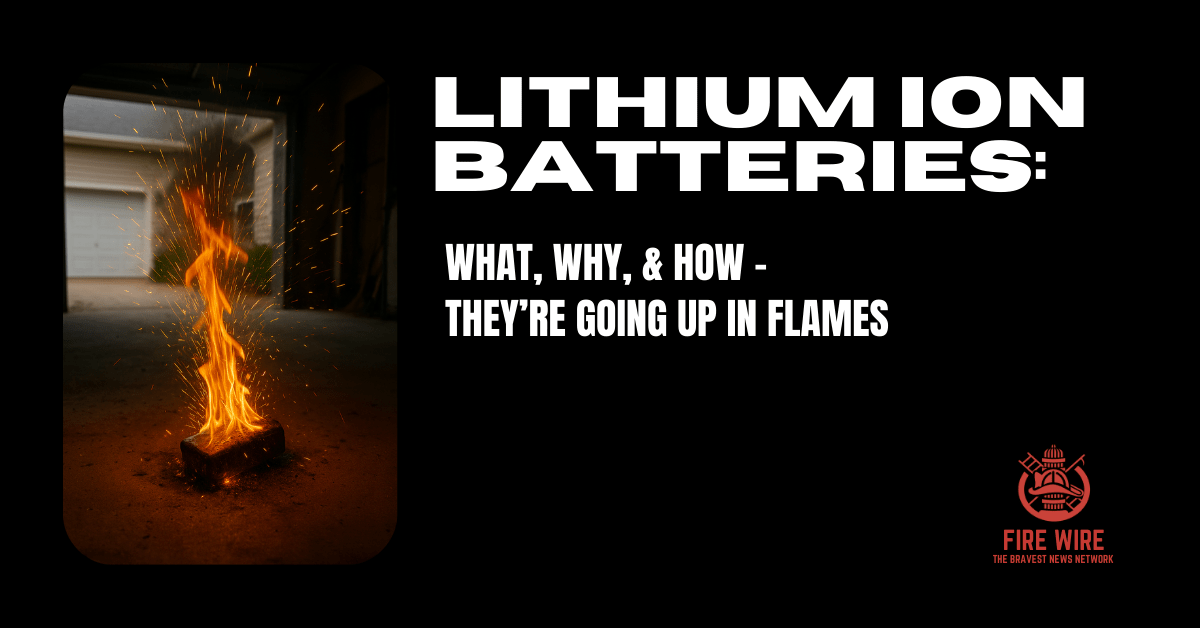
Lithium-ion batteries are built into nearly everything—phones, laptops, scooters, cordless tools, even large power grid facilities. They’re efficient and powerful, but when they fail, the result is fast-moving fire, toxic smoke, and violent explosions.
Across the U.S., fire departments are seeing a sharp rise in lithium-ion battery incidents. These fires are different from most others: they start suddenly, spread rapidly, and are difficult to extinguish.
This is not a local problem. It is a national fire hazard tied directly to how we use, store, and handle these batteries.
Where Lithium-Ion Batteries Are Found
- At home: cell phones, laptops, headphones, vape pens, power banks, drones, kids’ ride-on toys, cordless vacuums.
- Transportation: e-bikes, scooters, hoverboards, mobility scooters, wheelchairs, hybrid and electric vehicles.
- At work: cordless tools, warehouse robots, radios, scanners, medical devices, backup UPS units.
- Energy infrastructure: large Battery Energy Storage Systems (BESS)—utility-scale “battery farms” tied into the electric grid.
Small batteries, like those in cell phones, rarely cause large-scale fires. The higher-risk devices are large battery packs—especially aftermarket or cheaply made replacements that skip essential safety features.
Why Lithium-Ion Batteries Fail
Lithium-ion batteries fail through thermal runaway. Once one cell overheats, it cascades through the entire pack. The result: unstoppable heat, venting toxic gases, flames that burn like a torch, and in some cases explosions.
Main causes of thermal runaway:
- Misuse: using the wrong charger, overcharging, or leaving batteries plugged in unattended.
- Cheap manufacturing: counterfeit or poorly made packs without built-in safety circuits.
- Physical damage: dropping, crushing, or puncturing a pack.
- Heat exposure: leaving batteries in cars, attics, or near heat sources.
- Aging: older batteries degrade, and their safety systems become unreliable.
Real Incidents
Bronx, NY – Five-Alarm Fire (2025)
Multiple e-scooters and e-bikes stored on a porch ignited. Fire escalated to five alarms. Thirteen firefighters and two civilians injured. Damage was extensive and nearly fatal for residents trapped inside.
Queens, NY – Fatal Pizzeria Fire (2025)
On July 4, 2025, an e-bike battery exploded inside a Flushing pizzeria restroom. Flames shot out like a blowtorch, killing a 76-year-old woman. The fire spread so fast there was no chance to escape.
Surprise, Arizona – BESS Facility Fire (2019)
A grid-scale battery storage site caught fire and later exploded, injuring multiple firefighters. The fire burned for hours, producing hazardous gases. Similar incidents have since occurred in California and Texas, proving that utility-scale batteries can pose risks on par with hazmat events.
National Trend
From New York to California, fire departments report double-digit increases in lithium-ion fires each year. Structural fires tied to these batteries are up significantly. In early 2025 alone, there were over 40 structural fires nationwide linked directly to lithium-ion failures—a 53% increase over the same period in 2024.
Hazards Beyond Homes
Lithium-ion fires are not limited to consumer devices.
- Workplaces: Shops and offices charging multiple tools on cheap power strips. Overloaded outlets combined with damaged batteries can ignite quickly.
- Storage rooms: Warehouses or offices with multiple battery packs stored in close proximity risk chain-reaction fires.
- Public transportation: Transit systems nationwide are seeing scooter and e-bike fires on trains and buses, forcing evacuations.
- BESS facilities: Communities near grid-scale battery sites must understand that these facilities store enough energy to power entire neighborhoods—and can burn uncontrollably for days if something goes wrong.
Prevention
At home and at work:
- Use only manufacturer-approved chargers.
- Never charge unattended or overnight.
- Charge on hard, non-combustible surfaces.
- Keep batteries away from hallways, bedrooms, and exits.
- Do not pile multiple batteries together or near combustibles.
- Inspect regularly: swelling, leaks, or excess heat means the battery is unsafe.
- Recycle properly—never throw lithium-ion batteries in the trash.
Workplace-specific measures:
- Designated charging stations only.
- Avoid cheap multi-outlet strips.
- Fire-rated charging cabinets where multiple packs are stored.
- Train staff to recognize early warning signs: smoke, hissing, or swelling.
Community-level precautions:
- Towns with BESS facilities must plan for evacuation zones and extended-duration incidents.
- Fire departments need hazmat-level training for BESS responses.
- Public education campaigns must emphasize charging safety for scooters and e-bikes.
National Concern
Lithium-ion fires are increasing across the United States. They are not confined to big cities like New York or Los Angeles—they are showing up in suburbs, small towns, and rural communities.
These fires:
- Burn hotter and spread faster than typical residential fires.
- Produce toxic smoke requiring full respiratory protection.
- Cannot always be extinguished with water alone—sometimes batteries must burn out under controlled conditions.
The hazard is growing with the expansion of e-bikes, EVs, and BESS infrastructure. This is a fire problem that will continue to expand unless prevention measures are taken seriously.
In conclusion:
Lithium-ion batteries are not the enemy. Misuse, damage, and poor storage are.
- Misuse: wrong chargers, leaving devices plugged in, aftermarket packs.
- Damage: drops, dents, ignoring swelling or leaks.
- Bad storage: charging indoors overnight, blocking exits, stacking packs in closets.
The technology is here to stay. But most lithium-ion fires are preventable. Respect the batteries. Charge them safely. Store them properly. Dispose of them correctly.
Failure to do so is what puts lives, homes, and entire communities at risk.
Find out about all alarms across NYC, Long Island, and beyond – on the minute with the Fire Wire App.
We have also covered incidents across the USA and even internationally! Make the NYC Fire Wire App your go-to for all emergency news. Turn on notifications to hear about incidents on the minute!
DOWNLOAD TODAY!
Select your operating system to download now:
Learn more about the app here.
Follow Us!
Facebook | Instagram | Twitter
Sources
- CBS News – Lithium-ion battery fires: growing risk for firefighters
- FireRescue1 – FDNY: Li-ion batteries caused 5-alarm Bronx fire
- The Sun – Queens pizzeria e-bike battery fire kills grandmother
- Times Union – National spike in lithium-ion fires
- AP News – Lithium-ion fire risk across U.S.
- FSRI – Research on thermal runaway hazards
- Clemson University – Lithium-ion fires are a growing public safety concern
- NFPA – Battery Energy Storage System fire incidents